









CPUX-F – UX-Foundation

UX requires more than method knowledge. It requires a clear process understanding and a shared professional language.

Learn the principles and terminology of Human-Centered Design (HCD) based on ISO 9241-210.

Aktuell sind keine kommenden Seminare vom Typ "cpux-f-eng" verfügbar.

Why is the CPUX-F seminar useful?

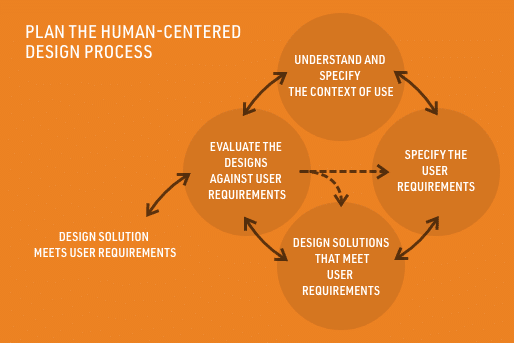
Diagram of the iterative Human-Centered Design process including context analysis, requirement definition, solution design and evaluation.

Secure your €250 discount – UX Weeks

Valid until June 30, 2026 for public UX trainings by Mindfacts in 2026. Not combinable with other discounts or promotions. Limited-time offer.

Who is CPUX-F designed for?

The seminar is aimed at professionals who want to understand UX in a structured and professional way. Prior knowledge is helpful but not required.

UX-Professionals

Webdesigner, Produkt- und Servicedesigner, Usability Engineer, User-Interface-Designer, Entwickler, Software-Spezialisten, Researcher, Produktmanager

Students and young professionals

Individuals who want to build a solid UX foundation early in their career

Official certification bodies

The CPUX-F certificate is internationally recognized.

The CPUX-F certificate is internationally recognized.

What topics are covered in the CPUX-F seminar?

The human-centered design process
Lorem ipsum dolor sit amet, consectetur adipisi cing elit, sed do eiusmod tempor incididunt ut abore et dolore magna
Fundamental terms, concepts and standards
Lorem ipsum dolor sit amet, consectetur adipisi cing elit, sed do eiusmod tempor incididunt ut abore et dolore magna
Understanding and specifying the context of usage
Lorem ipsum dolor sit amet, consectetur adipisi cing elit, sed do eiusmod tempor incididunt ut abore et dolore magna
Deriving needs and user requirements
Lorem ipsum dolor sit amet, consectetur adipisi cing elit, sed do eiusmod tempor incididunt ut abore et dolore magna

The human-centered design process

This module introduces the Human-Centered Design process as a structured foundation for user-centered design.
  • What does human-centered design mean according to ISO 9241-210?
  • Which stages make up the HCD process and how do they interact?
  • What roles do research and evaluation play in an iterative approach?

Fundamental terms, concepts and standards

This module establishes a shared terminology for professional UX work.
  • What is the difference between usability and user experience?
  • Which quality criteria are used to assess usage?
  • What roles do standards and guidelines play in professional UX practice?

Understanding and specifying the context of usage

This module focuses on the systematic analysis of the usage situation as the starting point for design.
  • Who are the relevant user groups?
  • In which tasks, environments and conditions does usage take place?
  • How can context of usage be described and documented in a comprehensible way?

Deriving needs and user requirements

This module shows how concrete requirements emerge from context analyses.
  • Which needs arise from the context of usage and user goals?
  • What is the difference between needs and explicitly formulated user requirements?
  • How can requirements be formulated in a testable and traceable way?
  • How can requirements be structured and prioritized?

Was zeichnet Mindfacts als Anbieter aus?

Was zeichnet Mindfacts als Anbieter aus?

Praxisnahe Trainer

UX-Research-Erfahrung aus realen Projekten

Praxisnahe Trainer

UX-Research-Erfahrung aus realen Projekten

Praxisnahe Trainer

UX-Research-Erfahrung aus realen Projekten

Praxisnahe Trainer

UX-Research-Erfahrung aus realen Projekten

Praxisnahe Trainer

UX-Research-Erfahrung aus realen Projekten

Praxisnahe Trainer

UX-Research-Erfahrung aus realen Projekten

Praxisnahe Trainer

UX-Research-Erfahrung aus realen Projekten

Konditionen

Horem ipsum dolor sit amet, consectetur adipiscing elit.

Zu den Terminen
Super kompakt

Crashkurs

für die Prüfung an 1 Tag

490,00 €netto (+ Prüfung)
Besteller

Vorbereitung

Praxisorientiert auf die Zertifizierung

950,00 €netto (+ Prüfung)
Label

Flexible

im Alltag auf die Prüfung vorbereiten

1.090,00 €netto (+ Prüfung)
TeilnehmerzahlMaximal 10 TeilnehmerMaximal 10 TeilnehmerMaximal 10 Teilnehmer
StandortOnline per ZoomOnline per ZoomOnline per Zoom
Aufwand1 Tage in Vollzeit3 Tage in Vollzeit4 Tage in Teilzeit
UhrzeitenAb 09:00 bis ca. 17:30Ab 09:00 bis ca. 16:30Ab 09:00 bis ca. 14:10
Lerneinheiten9 LE (á 45 Minuten)22 LE (á 45 Minuten)24 LE (á 45 Minuten)
FokusFokus auf Prüfung (vorab Selbststudium)Viele ÜbungenViele Übungen

Aktuelle Trainings- und Seminartage

Aktuelle Trainings- und Seminartermine

Wir verknüpfen aktuelle Erkenntnisse aus Forschung und Praxis mit der systematischen Struktur des CPUX-F-Curriculums.

07.10.2026 - 09.10.2026

CPUX-F

  • 950
  • Online
  • 3
  • Vollzeit
  • 22
  • german
  • beginner
  • 12

21.07.2026 - 24.07.2026

CPUX-F

  • 1090
  • Online
  • 4
  • Teilzeit
  • 24
  • german
  • beginner
  • 11
Lorem ipsum dolor sit amet, consectetur adipiscing elit. Fusce justo lectus, egestas ut euismod a, rutrum a ligula. Donec faucibus sagittis nulla eget luctus. Vivamus odio est, gravida eget lobortis a, fermentum id diam. Suspendisse id augue elit. Ut elementum, ligula in laoreet sodales, quam mauris pulvinar urna.

10.06.2026 - 12.06.2026

CPUX-F

  • 950
  • Online
  • 3
  • Vollzeit
  • 22
  • german
  • beginner
  • 12

04.02.2026 - 06.02.2026

CPUX-F

  • 950
  • Online
  • 3
  • Vollzeit
  • 22
  • german
  • beginner
  • 12

16.12.2026 - 18.12.2026

CPUX-F

  • 950
  • Online
  • 3
  • Vollzeit
  • 22
  • german
  • beginner
  • 12

17.09.2026 - 17.09.2026

CPUX-F

  • 490
  • Online
  • 1
  • Vollzeit
  • 8
  • german
  • beginner
  • 12

15.04.2026 - 17.04.2026

CPUX-F

  • 950
  • Online
  • 3
  • Vollzeit
  • 22
  • german
  • beginner
  • 12
Geschäftsführer und Head of UX Research

Patrick Gallitz

Geschäftsführender Gesellschafter

Seit über zwei Jahrzehnten arbeitet Patrick Gallitz in der Usability- und UX-Forschung. Als Trainer vermittelt er UX nicht abstrakt, sondern mit klarer Struktur, normativer Einordnung und spannendem Bezug zur Projektpraxis.

Prüfungserfolg

Unser Seminar in Zahlen

Praxisanteil
Zufriedenheit
Weiterempfehlung
Prüfungserfolg

Dokumente des UXQB zur Vorbereitung

Seminarinformation und Weiterbildungs­programm

Inhouse-Seminare CPUX-F – auf Deutsch und Englisch

UX-Wissen mit praktischem Mehrwert – Inhouse geschult. Mindfacts ist seit 2004 als UX-Research-Agentur tätig, profitieren Sie von unserem Wissen!

Seminarprogramm Mindfacts

Mindfacts ist seit 2004 als UX-Research-Agentur tätig, profitieren Sie von unserem Wissen!

Programmheft CPUX-F

Praxisbezogenes, aktuelles Wissen in den Bereichen Usability und User-Experience wird in Unternehmen zunehmend wichtiger

Dokumente des UXQB zur Vorbereitung

Musterzertifikat CPUX-F

UXQB® Certified Professional for Usability and User Experience

CPUX-F Prüfungsordnung

Ds ist nur ein Beispieltext

Öffentlich zugängliche Prüfungsfragen

CPUX-F Öffentliche Prüfungsfragen (zu Übungszwecken)

Curriculum und Glossar

Certified Professional for Usability and User Experience Foundation Level

Macht es Sinn, sich auch zertifizieren zu lassen?

Die Zertifizierung ist optional. Seit 2025 ist CPUX-F keine Voraussetzung mehr für die Aufbaustufen User Requirements Engineering (CPUX-UR), Design Solutions (CPUX-DS) und Usability Testing and Evaluation (CPUX-UT).

Dennoch ist das Zertifikat ein international anerkannter Nachweis deiner UX-Fachkompetenz. Es schafft formale Sichtbarkeit, etwa bei Bewerbungen, internen Rollen oder in Organisationen, in denen CPUX-Standards etabliert sind.

Die Anmeldung erfolgt entweder über Mindfacts oder direkt über unsere Partnerorganisation Certible. Für den Erhalt des Zertifikats ist eine 75-minütige Online-Prüfung mit 40 Multiple-Choice-Fragen zu absolvieren. Die Bestehensgrenze liegt bei 70 %.

Dennoch ist eine Zertifizierung sinnvoll, um die eigene UX-Fachkompetenz nachzuweisen. Teilnehmer, die keine CPUX-F Prüfung ablegen möchten, erhalten aber von uns eine Teilnahmebestätigung.
Die Anmeldung kann über Mindfacts oder direkt bei unserer Partnerorganisation Certible erfolgen. Die Terminwahl ist völlig flexibel. Für den Erhalt des Zertifikats muss eine 75-minütige Multiple-Choice-Prüfung (Online) mit 40 Fragen erfolgreich bestanden werden (70% der Punkte)

Das sind die Gebühren:

Weitere Seminare

Would you like to systematically expand your UX skills?

Entdecke hier unser weiterführendes Weiterbildungsprogramm.

UXQB-Aufbauseminar

CPUX-UT

Deepen your expertise in planning, conducting and analyzing usability tests and inspections – including preparation for the official CPUX-UT certification exam.

UXQB-Aufbauseminar

Moderation in usability testing

Learn how to professionally moderate qualitative interviews in usability tests to obtain objective and valid findings.

UXQB-Aufbauseminar

In-house training

Strengthen your team's research and UX know-how directly within your organization – with practice-oriented in-house training on CPUX, UX research, usability testing and more.

FAQ

Frequently Ask Question

No, prior knowledge is not required. The seminar systematically introduces all relevant foundations. Participants without professional UX background can follow the training without difficulty.

Yes, experienced professionals also benefit from the seminar. CPUX-F helps formalize terminology, align processes with ISO standards and make implicit knowledge explicit.

We offer CPUX-F as a 1-day crash course, a 3-day full-time seminar and a 4-day part-time format. The 3-day full-time seminar allows for deeper understanding and extended exercises.

Certification is advisable if you want formal proof of your UX competence. The certificate is recognized in many organizations and professional contexts. Approximately 85% of our participants choose to take the exam.

The exam is conducted online and lasts 75 minutes. It consists of 40 multiple-choice questions. A minimum of 70% is required to pass.

Yes, this is formally possible. However, participants who attend structured training statistically pass more often than self-learners.

Yes, especially for establishing a shared professional foundation. A shared terminology reduces coordination effort and increases methodological consistency in projects.

Nutzungs­kontext­analyse

Anforderungsanalyse

UX-Benchmarking

Usability-Test

Barrierefreiheitstest

Preis- & Feature-Analyse

Werbemitteltest

Kontinuierliche CX‑Forschung