
CPUX-F – UX-Foundation
UX requires more than method knowledge. It requires a clear process understanding and a shared professional language.
Learn the principles and terminology of Human-Centered Design (HCD) based on ISO 9241-210.
CPUX-F(ENG)
09.12.2026 - 11.12.2026Practice-oriented preparation for certification
- 1.290,00 €
- Online
- 3
- Vollzeit
- english
- 12
Why is the CPUX-F seminar useful?
- Build a solid foundation in usability and user experience.
- Understand the role of UX research within the design process.
- Establish a shared UX language within project teams.
- Argue UX measures more convincingly towards management.
- Apply UX methods purposefully at the appropriate project stage.
- Document your UX competence with an internationally recognized certificate.
Secure your €250 discount – UXWEEKS
Valid until June 30, 2026 for public UX trainings by Mindfacts in 2026. Not combinable with other discounts or promotions. Limited-time offer.
Who is CPUX-F designed for?
The seminar is aimed at professionals who want to understand UX in a structured and professional way. Prior knowledge is helpful but not required.

UX professionals
Web designers, product and service designers, usability engineers, user interface designers, developers, software specialists, researchers, product managers
Students and young professionals
Individuals who want to build a solid UX foundation early in their career
The CPUX-F certificate is internationally recognized.





What topics are covered in the CPUX-F seminar?
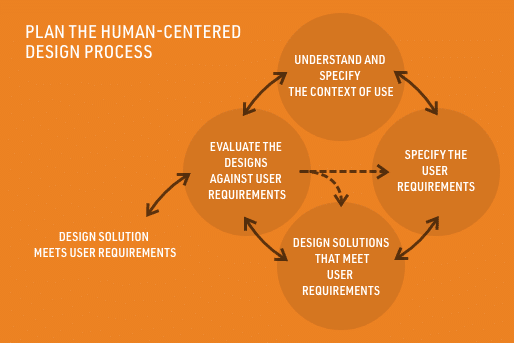
The human-centered design process
- What does human-centered design mean according to ISO 9241-210?
- Which stages make up the HCD process and how do they interact?
- What roles do research and evaluation play in an iterative approach?
Fundamental terms, concepts and standards
- What is the difference between usability and user experience?
- Which quality criteria are used to assess usage?
- What roles do standards and guidelines play in professional UX practice?
Understanding and specifying the context of usage
- Who are the relevant user groups?
- In which tasks, environments and conditions does usage take place?
- How can context of usage be described and documented in a comprehensible way?
Deriving needs and user requirements
- Which needs arise from the context of usage and user goals?
- What is the difference between needs and explicitly formulated user requirements?
- How can requirements be formulated in a testable and traceable way?
- How can requirements be structured and prioritized?
Creating design solutions
- How are user requirements systematically translated into design ideas?
- Which principles support consistent and user-centered design solutions?
- What roles do early concepts and prototypes play in the HCD process?
- Why is design not a one-off step but part of an iterative approach?
Usability testing
- What is the goal of usability testing within the design process?
- When are formative or summative evaluations appropriate?
- How are results analyzed and used in a traceable way?
Inspections and user surveys
- What characterizes inspection methods compared to user-based methods?
- In which situations are surveys suitable for collecting user experience data?
- What are the limitations of surveys and inspections compared to observation?
Awards
What distinguishes Mindfacts as a training provider?
Trainers with active UX research project experience
Structured delivery aligned with CPUX-F and ISO 9241
Exclusive practice questions in CPUX exam style
Strong practical focus with hands-on exercises
Collaborative boards for visual structuring
Best practices from real project work
Individual feedback and room for discussion
Plenty of practice Practice-orientedpreparation for certification 1.290,00 €netto (+ Prüfung) | |
|---|---|
| Participants | Up to 12 participants |
| Location | Online via Zoom |
| Duration | 3 days in full-time |
| Schedule | From 9:00 a.m. to 5:30 p.m. each day |
| Learning Units | 26 learning units (45 minutes each) |
| Focus | Many exercises |
Konditionen
Wähle das passende Format für deine Zertifizierung.
Zu den TerminenPractice-oriented
preparation for certification
- Participants
- Up to 12 participants
- Location
- Online via Zoom
- Duration
- 3 days in full-time
- Schedule
- From 9:00 a.m. to 5:30 p.m. each day
- Learning Units
- 26 learning units (45 minutes each)
- Focus
- Many exercises
Tobias Engel
User Experience Consultant
Tobias Engel has extensive experience in UX consulting and digital product optimization. In his seminars, he combines structured methodological knowledge with practical examples from real-world projects.
- Degree in Computer Science (Digital Media)
- UXQB Certified Professional for User Experience – Foundation Level (CPUX-F)
- Over 17 years of experience in multichannel customer insight, experience design and conversion optimization
- info@mindfacts.de
- +49 (0) 89 / 44 45 45 43

Does it make sense to get certified?
Certification is optional. Since 2025, CPUX-F is no longer a prerequisite for the advanced certifications User Requirements Engineering (CPUX-UR), Designing Solutions (CPUX-DS) and Usability Testing and Evaluation (CPUX-UT).
Nevertheless, the certificate remains an internationally recognized proof of UX competence. It provides formal visibility in applications, internal role definitions and organizations that use CPUX standards.
Participants who choose not to take the exam receive a certificate of attendance.
Registration can be completed via Mindfacts or directly through our partner organization Certible. Exam dates are flexible.
To obtain the certificate, you must pass a 75-minute online multiple-choice exam with 40 questions. The passing threshold is 70%.
Exam Fees (net):
- Standard: €300
- German UPA members: €240
- Students: €150

Exam success
Our seminar in numbers
UXQB documents for preparation
Seminar information and further training program
Inhouse-Seminare CPUX-F – auf Deutsch und Englisch
Seminarprogramm Mindfacts
Programmheft CPUX-F
UXQB documents for preparation
Musterzertifikat CPUX-F
CPUX-F Prüfungsordnung
Öffentlich zugängliche Prüfungsfragen
Curriculum und Glossar
FAQ
Frequently Asked Questions
Do I need prior knowledge in UX or usability?
No, prior knowledge is not required.
The seminar systematically introduces all relevant foundations. Previous experience is helpful but not mandatory. Participants without professional UX background can follow the training without difficulty.
Is the course also suitable for experienced UX professionals?
Yes, experienced professionals also benefit from the seminar.
Many practitioners work intuitively and effectively. CPUX-F helps formalize terminology, align processes with ISO standards and make implicit knowledge explicit. This supports collaboration in larger teams and organizations.
Which seminar format is right for me?
The right format depends on your prior knowledge, learning style and time availability.
We offer CPUX-F as a 1-day crash course, a 3-day full-time seminar and a 4-day part-time format.
- The 1-day format is suitable for self-learners or participants with solid prior knowledge who want a compact review and intensive exam practice.
- The 3-day full-time seminar (09:00–16:30) allows for deeper understanding, extended exercises and more discussion.
- The 4-day part-time format (09:00–14:10) distributes the content across several days and provides greater flexibility for professional schedules.
All formats follow the official curriculum.
Should I get certified?
Certification is advisable if you want formal proof of your UX competence.
The certificate is a recognized qualification in many organizations and professional contexts. Approximately 85% of our participants choose to take the exam after the seminar.
How does the exam work?
The exam is conducted online and lasts 75 minutes.
It consists of 40 multiple-choice questions. A minimum of 70% is required to pass. We practice this exam format intensively during the seminar and achieve a high pass rate.
Can I take the exam without attending the seminar?
Yes, this is formally possible.
The exam is not tied to seminar participation. However, participants who attend structured training statistically pass more often than self-learners. Independent candidates should carefully study the full curriculum and practice exam-style questions.
Is CPUX-F worthwhile for companies?
Yes, especially for establishing a shared professional foundation.
A shared terminology and process understanding reduces coordination effort and increases methodological consistency in projects. We offer in-house seminars on-site or remote, in German or English.
Other seminars
Would you like to systematically expand your UX skills? Discover our advanced training program.
CPUX-UT
Deepen your expertise in planning, conducting and analyzing usability tests and inspections – including preparation for the official CPUX-UT certification exam.
Moderation in usability testing
Learn how to professionally moderate qualitative interviews in usability tests to obtain objective and valid findings. Improve your interview techniques through example studies with real participants.
In-house-training
Strengthen your team’s research and UX know-how directly within your organization – with practice-oriented in-house training on CPUX, UX research, usability testing, moderation techniques and more. Also available in English for international teams.